After First Signs of a Stroke, Dorothy Finds Lifesaving Care in Under an Hour
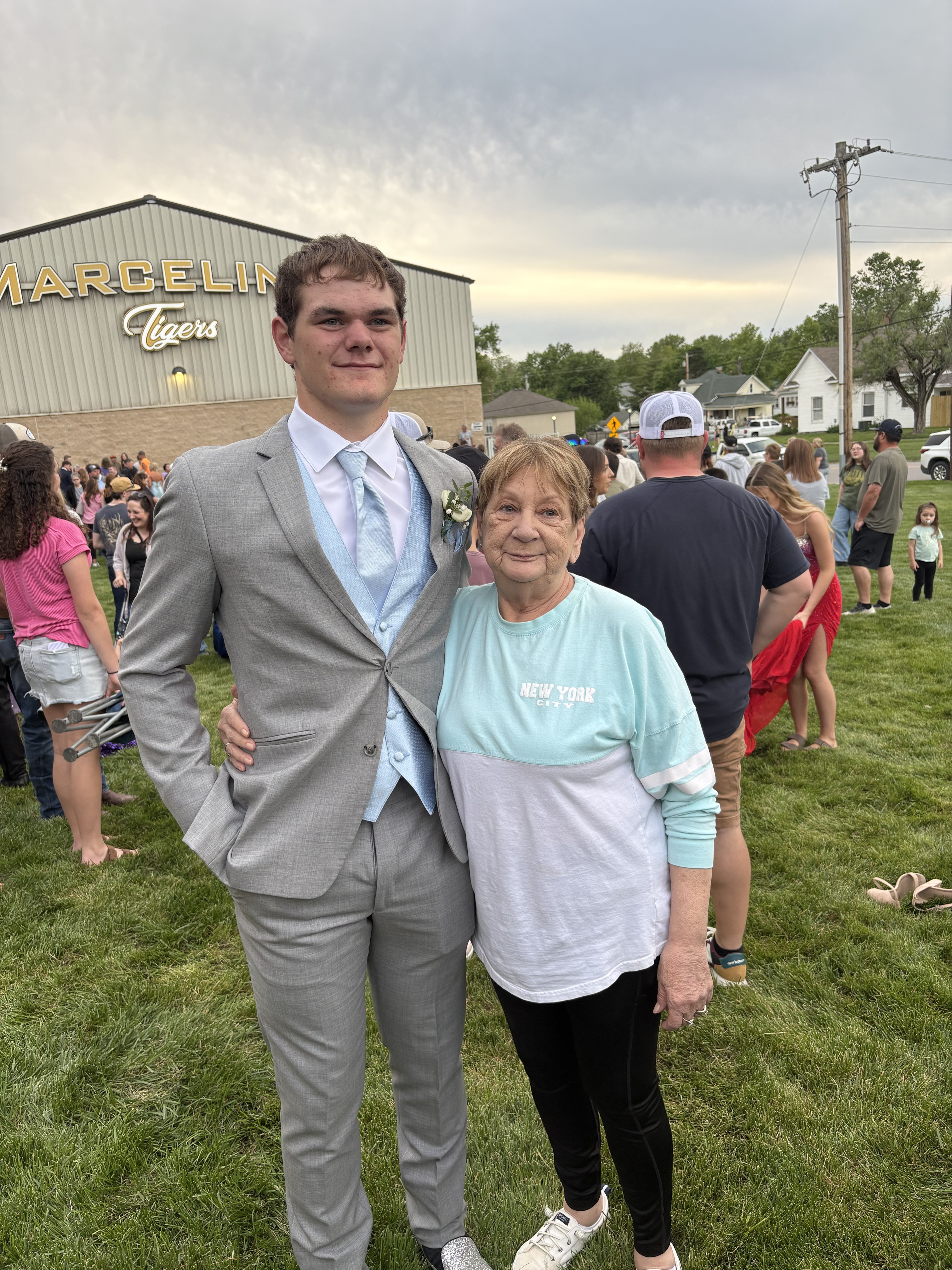 This past March, Dorothy Esser, 71, had a casual phone conversation with a friend. About 15 minutes later, her vision started to blur and her legs felt weak. Dorothy was active and hadn’t had significant health concerns, so this feeling was out of the ordinary.
Soon, she couldn’t stand up and her mind was cloudy, which are telling signs of a stroke. Her husband called their neighbor—a first responder—who arrived in minutes.
Paramedics assessed Dorothy and took her to a hospital near her Marceline, Missouri, home. A CT scan revealed a hemorrhagic stroke and a suspected vascular malformation, which is an irregular grouping of blood vessels. In hemorrhagic stroke, one of the most important initial treatments is stabilizing her blood pressure.
The abnormality caused bleeding in two places, and, after stabilizing her blood pressure, her care team helped her find specialized stroke treatment for immediate medical attention.
“They wanted me to go to Saint Luke's as soon as possible for their stroke program,” Dorothy says. “They preferred I take the helicopter, which I had never been on before.”
She arrived via helicopter at Saint Luke’s Hospital of Kansas City. Joined by her husband, daughter, and son-in-law, she had a strong support system from the start.
The speed and awareness involved in Dorothy’s care up to this point gave her the best chance to come away without permanent side effects from the stroke. During a stroke, every minute can cost the patient 2 million brain cells.
“It took maybe 30 minutes from getting on the helicopter to receiving treatment at Saint Luke’s,” Dorothy says. “The doctors read the CT scan before I came out of the room, so they were already on the phone calling the helicopter.”
A rare diagnosis
Once arriving at Saint Luke’s, the intake team controlled her blood pressure with intravenous medications. She then underwent a test called a diagnostic angiogram, which confirms the presence of a vascular malformation and helps guide the proper surgical treatment plan.
The day after she arrived at Saint Luke’s, Dorothy met with Yifei Duan, MD, a neurosurgeon with Saint Luke's Neurological & Spine Surgery, and learned that she had an arteriovenous malformation. This condition occurs when arteries and veins are incorrectly connected in the brain.
This rare diagnosis is found in less than 1% of stroke patients and the cause is unknown. Many defects are present at birth and people don't have symptoms unless the vessels rupture or interfere with nearby brain activity. In Dorothy's case, the vascular malformation ruptured, which caused the bleeding.
Dr. Duan performed surgery two days later to carefully remove the ruptured vascular malformation from the surrounding normal brain through a small window in the back of her skull. After the surgery was completed, Dr. Duan performed an angiogram, a test to ensure the vascular malformation was completely removed.
“It is critically important that patients with complex cerebrovascular diagnoses are managed at high volume centers of excellence such as Saint Luke's to maximize their opportunity for a positive clinical outcome," Dr. Duan says.
Saint Luke’s Marion Bloch Neuroscience Institute treats more than 2,000 stroke cases a year, with lower complication rates than the national average.
Not missing a thing
After the surgery, Dorothy had some difficulty walking but began to regain strength within days. With help from physical therapy, her mobility returned quickly, and she was discharged after five days in the hospital.
She also experienced slurred speech and trouble with fine motor skills, but both steadily improved through occupational therapy and are no longer an issue. She continues postoperative checkups with Rachel Arrow, RN, APRN, to ensure her recovery has no complications.
Now, just weeks later, Dorothy has returned to much of the life she had before. She walks one to three miles each day and has resumed most of her regular activities.
She has eased back into her routine, staying active in her church and focused on what matters most, such as her grandson’s high school graduation this May.
“I can’t do everything like I did before,” she says, “but I’m not missing anything.”
About Saint Luke’s
Saint Luke's Hospital of Kansas City has consistently earned several prestigious honors for stroke care, including by The Joint Commission as a Comprehensive Stroke Center, and the state of Missouri as a Level I Time Critical Diagnosis Center for Stroke. Nationally, Saint Luke's beats key benchmark numbers for stroke care.
Relevant News
Patient Stories
Wife’s Quick Thinking Helps Husband
Patient Stories
Emergency Heart Care Helps Joan Celebrate Life’s Big Moments
Patient Stories
Healing in Harmony: How Music Helped Bob Recover After Stroke
Patient Stories
Runner Finishes Half Marathon 144 Days After Heart Surgery
Patient Stories
Gastric Bypass Journey Opens Door to New Adventures
Patient Stories