Joe Aspires to New Heights After Spinal Surgery
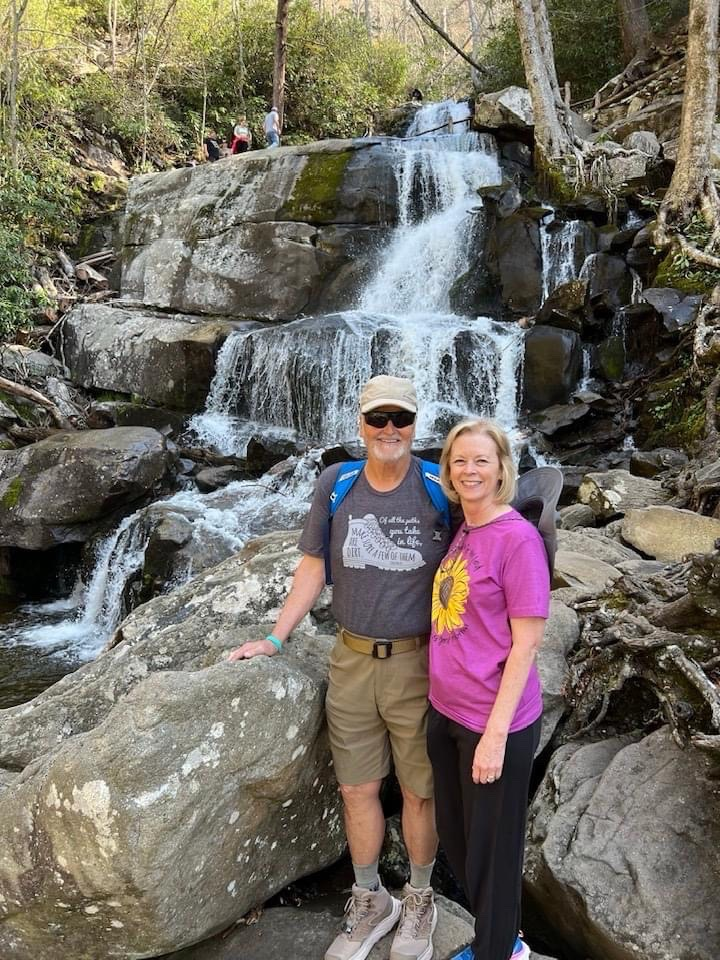
The Half Dome hike in Yosemite National Park pushes even seasoned hikers to the limit. Spanning 14 to 16 miles round trip with a 4,800-foot elevation gain, the rocky terrain demands deliberate focus to avoid serious injury. The final 400-foot ascent to the summit requires hikers to hold on to two metal cables as they scale the nearly vertical mountainside.
Joe Sepulvado is steadfast in his plans to hike the Half Dome in the near future—just two years after doctors at another hospital told him he wouldn’t be able to walk again.
That was until he found Saint Luke’s and a new path forward.
A life-changing development
In July 2024, Joe, a veteran who stayed active by running 30 miles a week, developed what seemed like a standard kidney infection.
But the infection entered his bloodstream, became septic, and settled along his lumbar spine. Joe was admitted to a nearby hospital where he underwent multiple surgeries to clear some of the infection.
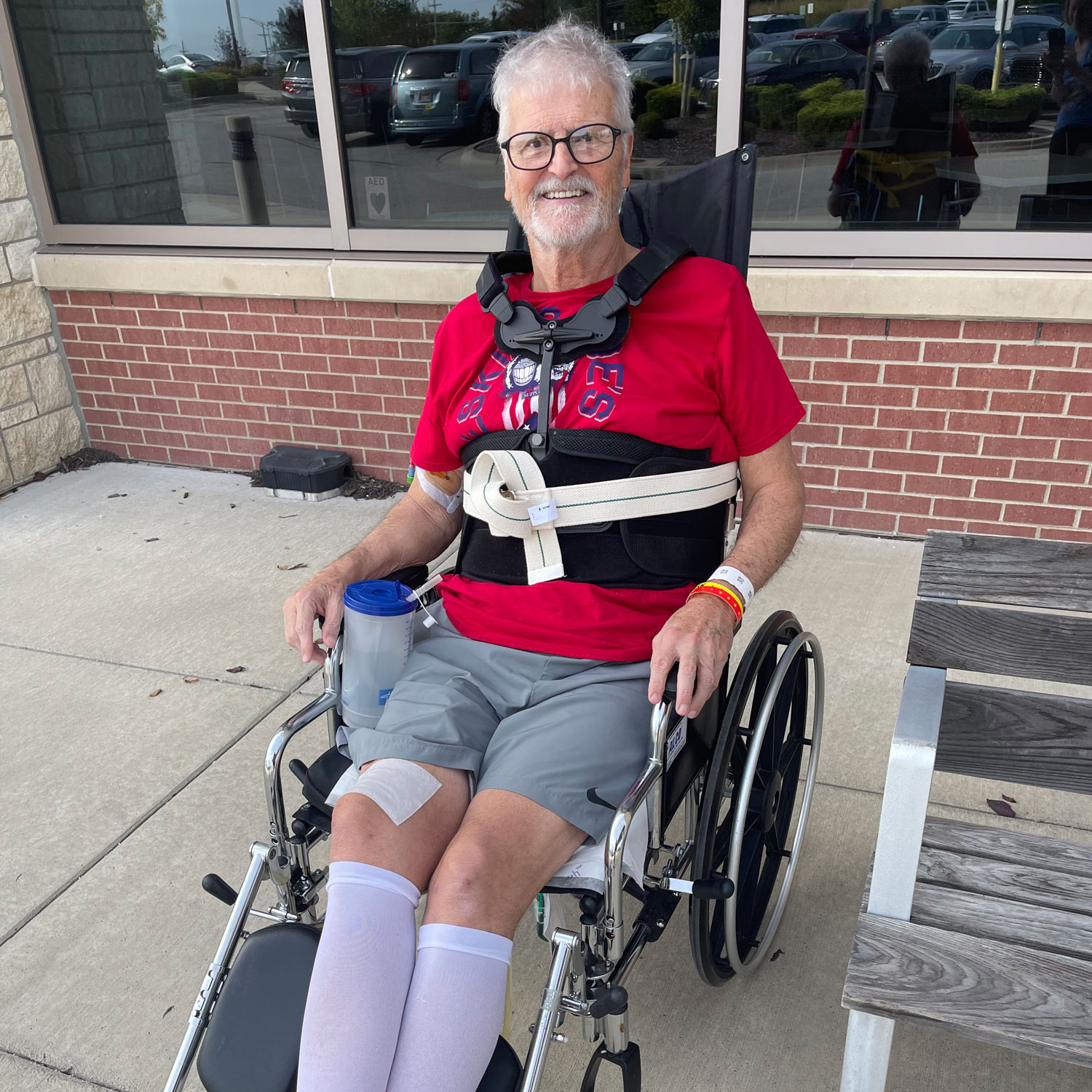
However, the infection caused significant bone deterioration and nerve damage in his spine, leaving Joe in severe pain and unable to walk.
“The main challenge was the mobility,” Joe says. “It felt like I was confined. The only way I could get in and out of the house was by using a ramp that my neighbors built into our garage.”
Joe’s doctor at the time warned he may never walk again because of the damage sustained by his lower spine, even suggesting long-term care. After six weeks in the hospital, Joe requested a transfer to Saint Luke’s Hospital of Kansas City for another expert opinion, which is where he met Carlos A. Bagley, MD, director of Saint Luke’s Marion Bloch Neuroscience Institute.
A multidisciplinary solution
Joe spent two weeks at the institute while Dr. Bagley and his coordinated spine team helped control the infection with antibiotics and regular blood monitoring.
Joe then was transferred to Saint Luke’s Rehabilitation Institute for four weeks of occupational and physical therapy. The therapy emphasized everyday functions, such as standing, walking and basic tasks throughout the house.
The Rehabilitation Institute features leading-edge therapeutic environments, along with customized care plans, so Joe’s therapy helped him prepare for daily living after returning home.
“I was still in a tremendous amount of pain because of the nerve damage to my lower back,” Joe says, “but I was dedicated to finishing my two sessions of therapy each day.”
When Joe arrived at Saint Luke’s, he was unable to stand. By the end of his time at the Rehabilitation Institute, Joe had improved enough to move around with a walker.
After months of antibiotics, Joe’s infection cleared. In February 2025, Dr. Bagley’s surgical team removed the necrotic bone and tissue and reconstructed Joe’s lumbar spine to decompress the nerves. Ideally, once the nerves recovered, Joe could regain some of his independence without as much discomfort.
“My hope coming out of the surgery was that we could improve hi pain,” Dr. Bagley says. “But the dramatic improvement in his mobility, walking, and everything that he's achieved has been absolutely remarkable.”
After the surgery, Joe regularly underwent outpatient physical therapy to improve his strength and balance. He also wears a carbon fiber brace on his right foot to help stabilize his right leg.
It’s been an uphill recovery, but Joe appreciated Dr. Bagley’s honesty while laying out the possible outcomes up front.
“He didn't oversell the surgery like I was going to get up and walk tomorrow morning,” he says. “I’m only at 80 to 85% right now, but the neurosurgery team basically gave me my life back."
One mile at a time
Today, nearly a year after the surgery, Joe is walking independently, up to five miles a day without assistance or devices. He supplements walking with cycling and strength exercises to continue rebuilding stability and improving his endurance.
In February 2026, he completed his first 5K since his infection. Within the next year, he hopes he’ll be able to take on Half Dome.
“That's my goal to push myself,” he says. “That's why I'm walking as much as I walk every day.”
It’s an ambitious goal, especially for someone who was told they would never walk again. But after the months of pain, therapy, and surgeries, he has already overcome the hardest part.
About Saint Luke’s Marion Bloch Neuroscience Institute
Saint Luke's Marion Bloch Neuroscience Institute’s multispecialty team provides the latest minimally invasive spinal surgical techniques to treat acute and chronic back pain. The fellowship-trained neurosurgery team have expertise in subspecialties ranging from asleep deep brain stimulation (DBS) surgery to treating skull-based tumors and everything in between.
The Neuroscience Institute is a comprehensive center for neuroscience research, education, and evidence-based medicine that combines faculty in neurology, neurosurgery, interventional neuroradiology, neurotology, psychiatry, and physical medicine and rehabilitation.
Relevant News
Patient Stories
Wife’s Quick Thinking Helps Husband
Patient Stories
Emergency Heart Care Helps Joan Celebrate Life’s Big Moments
News
FOX 4: New Music Therapy Helping Olathe Stroke Survivor Recover
Patient Stories
Healing in Harmony: How Music Helped Bob Recover After Stroke
Patient Stories
Runner Finishes Half Marathon 144 Days After Heart Surgery
Patient Stories