On the Road to Better Heart Health
After years of heart issues, an innovative clinical trial has Craig feeling better than ever
3 minutes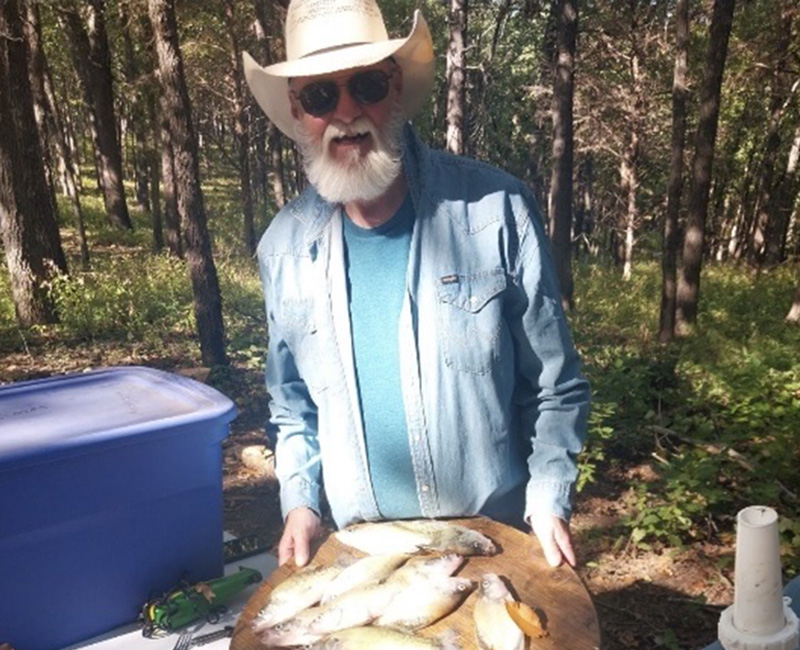
Craig Rhoads thought he’d run out of options.
At 66, Craig has spent half his life with coronary heart disease (CAD). His first heart attack occurred in his early 30s, and he has since had two bypass surgeries and 30-plus coronary stent placements to keep his heart healthy. Unable to work in his shop, hunt, fish, or walk to the bathroom without getting winded, when his cardiologist told him they were out of treatment options, Craig began to fear the worst.
“I figured my life was over; I was just waiting to die,” Craig says.
Thankfully, his cardiologist thought Craig would be a viable candidate for an innovative trial happening at Saint Luke’s Mid America Heart Institute.
A new path to explore
Craig agreed to make the four-plus-hour trip from his home in West Plains, Missouri, to meet with Anthony J. Hart, MD, and his team at the Heart Institute. Dr. Hart’s knowledge, as well as his compassion, immediately put Craig at ease.
“You’re not a number with him,” Craig says. “He sits and listens to you and tries to solve a problem if there is a problem.”
Dr. Hart reviewed Craig’s case and put him on the candidate list for the Coronary Sinus Reduction for Refractory Angina (COSIRA) II Shockwave Reducer trial. Saint Luke’s is the first provider in the region to offer the procedure, which can help patients like Craig who’ve explored multiple unsuccessful avenues to relieve their chest pain and CAD symptoms.
"At Saint Luke’s, we can provide comprehensive management to help patients with very challenging heart blockages,” says Dr. Hart. “But for those who have exhausted all options to restore blood flow, current treatment options are very limited. The coronary sinus reducer is a potential game-changer in the management of patients with few options."
The Shockwave Reducer is an innovative device designed to streamline blood flow in patients with severe coronary artery blockage. It is implanted into the affected blood vessel using a catheter inserted through a vein in the heart called the coronary sinus. Once the hourglass-shaped stent is in place, it increases the venous back pressure and blood flow into the heart and improves the oxygen delivery to blocked areas.
While the device is not yet approved outside of a research trial, it remains an exciting, non-surgical option that patients considered as “end stage” can pursue in the future.
“For people that have been told ‘there’s nothing more we can do’, the coronary sinus reducer can potentially help them walk farther without stopping, reduce emergency room visits, and regain independence in daily activities,” says Dr. Hart.
The Shockwave Reducer’s potential to improve his daily life appealed to Craig. He agreed to take part in the trial and had the Shockwave Reducer implanted during a short outpatient procedure in December 2024.
“The process itself took less than 30 minutes; it wasn’t long at all,” Craig says. “But within 3–4 hours, my body felt different.”
A return to healthier living
The procedure has led to a “night and day” difference, according to Craig.
“Everything changed right then,” Craig says. “My body feels great, and it takes a lot of exertion now for me to get any chest pain.”
These days, Craig is working to get back into shape. His heart issues forced a more sedentary lifestyle upon him, but he’s lost almost 200 pounds since his procedure through regular exercise and a strict regimen of vitamins and medications.
He says he “couldn’t have asked for better service at Saint Luke’s,” and with the anniversary of his procedure on the horizon, he wants heart disease patients to know one thing—there’s still hope.
“If my experience can show how much this can help people, that’s what it’s all about,” Craig says. “I would recommend anyone who is in the shape I was in to reach out to their cardiologist and ask about it.”
Learn more about Saint Luke's Mid America Heart Institute's region-leading innovation and care.
Relevant News
News
Health News You Can Use: Saint Luke's Complex Aorta Disease Program
Patient Stories
Wife’s Quick Thinking Helps Husband
Patient Stories
Emergency Heart Care Helps Joan Celebrate Life’s Big Moments
Patient Stories
Healing in Harmony: How Music Helped Bob Recover After Stroke
Patient Stories
Runner Finishes Half Marathon 144 Days After Heart Surgery
Patient Stories